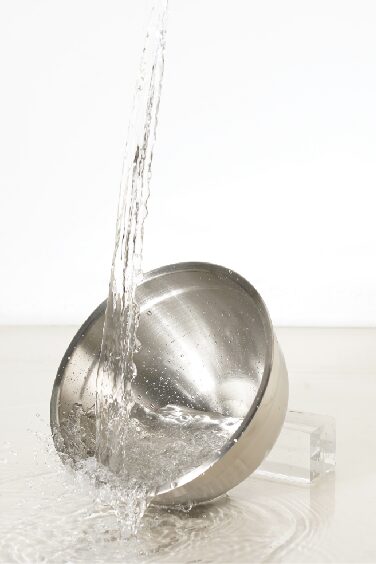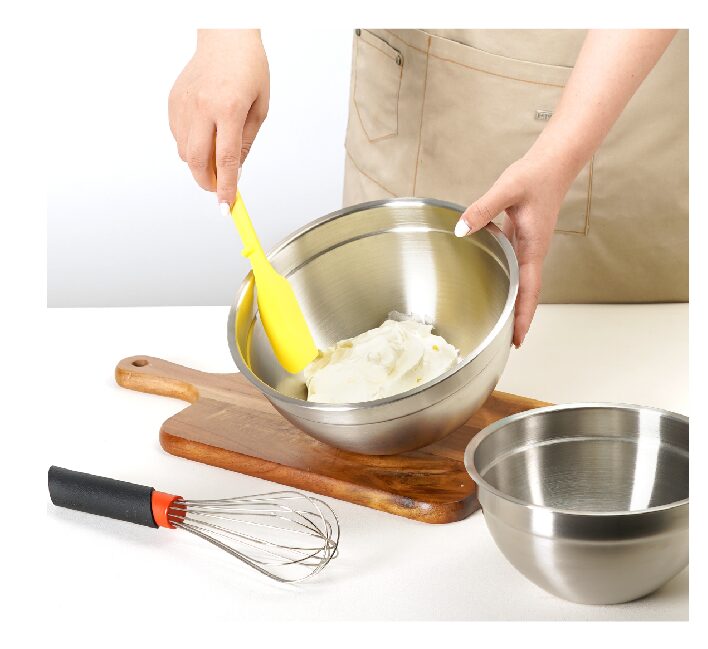
In the kitchen, pots, bowls, ladles, basins, and spoons are everywhere, and the most common material among them is undoubtedly stainless steel. It is sturdy, durable, resistant to impact, and easy to clean, making it the well-deserved “main force” of the modern family kitchen.
However, in recent years, rumors about “stainless steel leaching heavy metals and causing cancer” or “manganese poisoning” have been endless, causing many to feel uneasy at the mention of “heavy metals”: **Is stainless steel tableware really safe?** Today, let’s discuss this topic.
Why doesn’t stainless steel “rust”?
The “stainless” property of stainless steel is not actually innate; it relies on a key metallic element—chromium (Cr).
Generally, the chromium content in stainless steel must reach 12% or more. When chromium comes into contact with oxygen in the air, it forms a very thin but dense passivation film (mainly composed of Cr₂O₃) on the surface. This film acts like “invisible protective clothing” for the utensils, effectively isolating the internal iron (Fe) and other metallic elements from the external environment, thereby resisting rust and corrosion.
Without chromium, there is no corrosion resistance in stainless steel.
Another common element, nickel (Ni), is primarily used to stabilize the material structure and improve ductility and toughness, making the utensils more durable and the surface smoother. Nickel-containing stainless steel is widely used in the food processing industry, playing an indispensable role in food safety, whether in winemaking, dairy production, or commercial kitchen equipment.
Containing metal components ≠ Leaching will occur
Therefore, we must first clarify a concept: the “presence” of certain metal elements does not necessarily mean they will “leach.”
The real concern for most people is: since chromium and nickel are heavy metals, will they be ingested by the human body over long-term use? Will they pose a health risk?
The key lies in: the risk does not depend on whether the material “contains” these elements, but on whether they “migrate” into the food during use and “how much” they migrate.
Food-grade stainless steel has clear safety standards
Any stainless steel product that complies with the national food contact material standard GB 4806.9 must pass rigorous heavy metal migration tests, with clear limits set for elements such as lead, chromium, nickel, cadmium, and arsenic.
In the new GB 4806.9-2023 standard, the simulation liquid used for testing has been changed to a 5 g/L citric acid solution, which is more acidic, meaning the testing conditions are more stringent. Products that pass this test have extremely low metal leaching levels under normal use, far below the threshold for harming the human body, so consumers can use them with peace of mind.
Correct selection and use are equally important
Even the best materials require the correct selection and usage:
- Look for the “Food Contact” label; this is the basic prerequisite for safe use.
- Prioritize 304 or 316 stainless steel
Commonly labeled as “304” (18-8 stainless steel) or “316” (18-10 stainless steel), these are recognized food-grade stainless steels with excellent corrosion resistance, suitable for daily cooking and food storage. - Avoid purchasing products that are too cheap or poorly labeled
Products with unusually low prices, vague material labeling (such as falsely claiming 304), or unknown origins may use industrial-grade stainless steel with poor corrosion resistance, posing a relatively higher risk of heavy metal migration.
Usage Tips
Even with stainless steel utensils, “overuse” is not recommended:
- Avoid storing highly acidic or corrosive foods such as vinegar, lemon juice, sauerkraut, or pickles for long periods.
- It is recommended to consume the food as soon as possible after serving and clean the utensils immediately after use.
- Do not heat empty or dry-burn, as high temperatures can damage the surface passivation layer.
- Use a soft cloth and neutral detergent for cleaning, and keep them dry after washing to extend their lifespan and maintain surface brightness.
Conclusion
In summary, certified food-grade stainless steel utensils are a safe, hygienic, and healthy choice for the modern kitchen. We do not need to fear the term “heavy metals,” nor should we stop using them altogether out of unnecessary concern.
As long as you purchase clearly labeled products that meet food-grade standards through legitimate channels and use and maintain them correctly, stainless steel utensils can accompany our every meal for a long time with peace of mind, becoming a reliable partner in protecting family health.